
- Что такое цикл PDCA и для чего он используется?
- Цикл Планирование-Действие-Проверка-Действие (PDCA), объяснение (+ примеры карт мыслей PDCA)
- Что такое PDCA?
- Модель PDCA
- Использование Xmind для непрерывного совершенствования
- Когда следует использовать процесс PDCA?
- Достижение личных целей
- Управление предприятием
- Заключение
- Преимущества PDCA
- Непрерывное улучшение
- Решение проблем
- Привлечение сотрудников
- Адаптивность
- Часто задаваемые вопросы (ЧЗВ) о методе PDCA
- В чем разница между PDCA и PDSA?
- Цикл PDCA и Каизен
- Мы предлагаем самую гибкую платформу программного обеспечения
- Что означает цикл PDCA?
- Простой процесс для улучшения вашего бизнеса
- Что такое цикл PDCA?
- Как использовать цикл PDCA?
- Каковы преимущества использования цикла PDCA?
- Цикл PDCA против других методологий для улучшения процессов
- Пример использования цикла PDCA?
- Основные ошибки, которые следует избегать при внедрении цикла PDCA?
- What is the optimal frequency for measuring results and gathering feedback in the PDCA Cycle?
- For which types of problems is the PDCA cycle suitable?
- Brief History of PDCA
- How to Use the PDCA Cycle in Your Business
- Frequently Asked Questions (FAQs)
- What’s the difference between PDCA and PDSA?
- Who developed the PDCA Cycle?
- When should you use PDCA?
- What are some potential barriers to implementing PDCA?
- Can the PDCA cycle be used in any industry?
- Expert knowledge straight to your inbox
- Create a PDCA Cycle Template Using DATAMYTE
- PDCA Cycle at Somengil, the basis of the continuous improvement
- Steps of the PDCA cycle
- What Are Some Real-Life Examples of PDCA?
- Lockheed Martin
- Example #3
- Project Manager’s Guide to Kanban
- Stages of PDCA
- Using PDCA in innovation
- Why Is PDCA Important for Your Business?
- When can the PDCA Cycle be used?
Что такое цикл PDCA и для чего он используется?
Цикл PDCA – это инструмент управления качеством, который направлен на решение проблем структурированным способом с четырьмя простыми шагами: Планирование, Выполнение, Проверка и Действие.
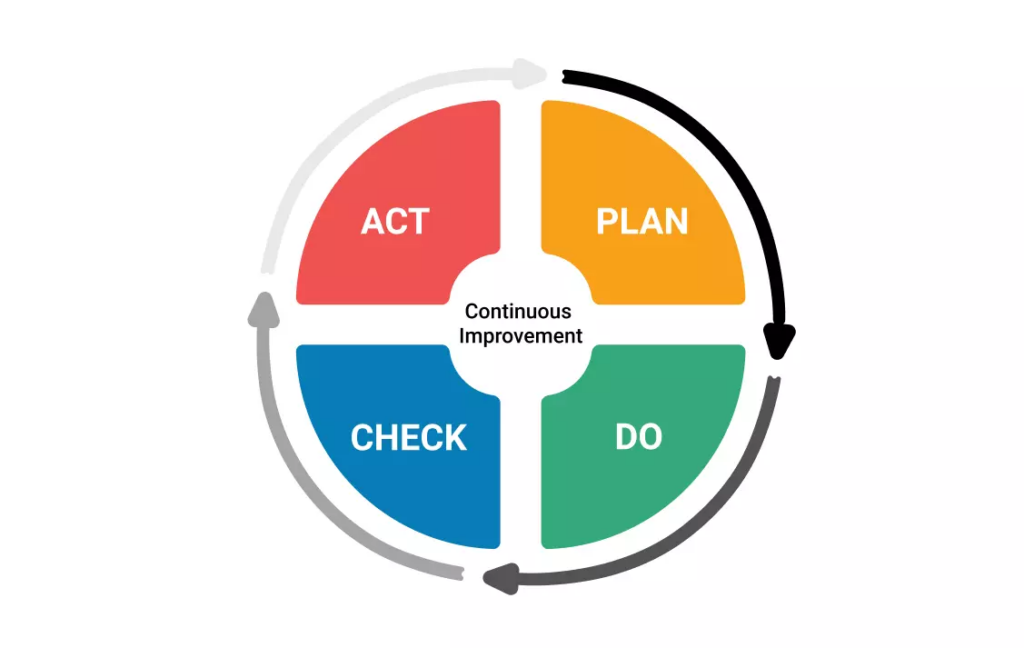
Цикл PDCA является одним из наиболее широко используемых методов непрерывного совершенствования. Он позволяет менеджерам выявлять коренные причины проблем и разрабатывать решения. Кроме того, цикл PDCA может быть очень полезен для выявления и устранения излишеств в процессах, что делает деятельность компаний более эффективной.
Цикл Планирование-Действие-Проверка-Действие (PDCA), объяснение (+ примеры карт мыслей PDCA)

Что такое PDCA?
PDCA был разработан доктором У. Эдвардсом Демингом, американским статистиком и экспертом по управлению качеством, в 1950-х годах. Работа Деминга была направлена на помощь компаниям в улучшении производственных процессов и достижении лучших результатов. Он считал, что качество является ключевым фактором успеха и что его можно достичь только через процесс непрерывного совершенствования.
PDCA основан на научном методе решения проблем, который включает разработку гипотезы, её тестирование и уточнение до тех пор, пока не будет найдено решение. Деминг понял, что этот же процесс можно применить к бизнесу и производственным процессам, и так появился PDCA.

Процесс решения проблем с использованием цикла PDCA основан на научном методе. Он включает планирование эксперимента для проверки гипотезы, выполнение эксперимента, изучение результатов и использование этой информации для формулировки новых гипотез. Этот цикл итеративный, что означает, что это непрерывный процесс, который никогда не должен останавливаться. После завершения эксперимента фокус должен переходить к планированию следующего, чтобы продолжать двигаться к улучшению.
Модель PDCA
Фаза Планирование – это первый шаг в цикле PDCA и включает в себя определение проблемы или возможности для улучшения и разработку плана для её решения.

Фаза Действие – второй шаг в цикле PDCA и включает в себя выполнение плана, разработанного в фазе Планирования.

Фаза Проверка – третий шаг в цикле PDCA и включает в себя анализ данных, собранных в фазе Действия, для определения того, работает ли план, как задумано.

Фаза Действие – это четвертый и последний шаг в цикле PDCA и включает в себя внедрение изменений на основе полученных в фазе Проверки результатов.

Использование Xmind для непрерывного совершенствования
Xmind поддерживает преобразование и смешивание различных структур. Когда вам нужно четко отобразить все процессы на одной диаграмме, вы можете использовать структуру ментальной карты, которая связывает четыре дерева таблиц. И на основе этого вы можете непрерывно планировать, делать, проверять и действовать.

Вы даже можете создать подробную диаграмму дерева для всего вашего цикла PDCA и пометить каждый шаг как выполненный, как только он выполнен.

Когда следует использовать процесс PDCA?
Использование цикла PDCA может стать игровым сменщиком для организаций, которые хотят непрерывно улучшаться и оставаться на передовой. Это гибкая структура, которая позволяет итеративно решать проблемы и дает возможность командам адаптироваться к изменяющимся обстоятельствам. PDCA стал широко принятым методом достижения непрерывного улучшения во многих областях бизнеса и личностного роста, включая производство, здравоохранение и разработку программного обеспечения.
Достижение личных целей
Например, управление весом тела является важной частью личного роста, поскольку поддержание здорового веса может привести к многочисленным пользам для здоровья и улучшенному общему благополучию.

Управление предприятием
Другой пример, управление производством является критическим компонентом бизнес-роста. Без него компании могут столкнуться с трудностями в оптимизации процессов производства, поддержании высоких стандартов качества и удовлетворении постоянно меняющихся требований рынка.

Заключение
Рим не был построен за один день, и то же самое с профессионализмом на рабочем месте. Но не бойтесь, мой друг! Есть удобный инструмент под названием модель PDCA, который может вам помочь. Это циклический процесс, который вы можете использовать для постоянного улучшения и становления лучше и лучше. Давайте присоединимся и насладимся преимуществами эффективной работы вместе. Вперед, команда!
Попробуйте бесплатно Xmind
Преимущества PDCA
Метод PDCA предлагает многочисленные преимущества организациям, стремящимся улучшить свои процессы, продукты и услуги. С помощью этого метода цикл PDCA помогает организациям достигать долгосрочного успеха и роста. С этими словами вот некоторые из значимых преимуществ, которые приходят с использованием этой методологии решения проблем и принятия решений:
Непрерывное улучшение
Структура PDCA поощряет мышление о постоянном улучшении в организации, что приводит к увеличенной эффективности. Путем непрерывного совершенствования процессов, продуктов и услуг организации могут оставаться впереди конкуренции и соответствовать ожиданиям клиентов.
Решение проблем
PDCA – это эффективный инструмент решения проблем, так как он систематически выявляет корневые причины проблем и внедряет корректирующие действия. Решая проблемы у их истоков, организации могут предотвратить их повторение и создать долгосрочные улучшения.
Привлечение сотрудников
Вовлечение членов команды в процесс PDCA способствует чувству владения и ответственности, стимулируя вовлеченность сотрудников. Когда сотрудники чувствуют заинтересованность в своей работе и понимают, как их вклад влияет на успех организации, они более склонны принимать изменения и стремиться к непрерывному совершенствованию.
Адаптивность
Итеративная природа цикла PDCA позволяет организациям быстро адаптироваться к изменяющимся обстоятельствам и потребностям клиентов. Организации могут оставаться гибкими и поддерживать конкурентное преимущество, регулярно пересматривая и корректируя планы и процессы в ответ на новую информацию или обратную связь.
Часто задаваемые вопросы (ЧЗВ) о методе PDCA
Шесть Сигм – это подход к управлению качеством и улучшению процессов, который предоставляет организациям набор инструментов и техник для улучшения производительности и повышения качества продуктов и услуг. Один из инструментов, входящих в этот набор, это цикл PDCA. В то время как Шесть Сигм предоставляет каркас для определения того, что замедляет процесс, методы, такие как PDCA, объясняют шаги по выявлению и устранению проблем.
В чем разница между PDCA и PDSA?
PDCA означает Plan-Do-Check-Act, в то время как PDSA означает Plan-Do-Study-Act. Несмотря на то, что эти две 4-хэтапные модели разработаны для улучшения процессов, разница между ними заключается в одном этапе в каждом цикле.
На этапе Check в PDCA команда должна проверить выполнение своего плана и посмотреть, сработал ли их исходный план. В отличие от этого, этап Study в PDSA направлен на подробный анализ результатов любого изменения, примененного на каждом этапе, чтобы обеспечить долгосрочные улучшения процесса. В любом случае, вы можете использовать обе модели, изучая и проверяя результаты полученные из тестов.
Цикл PDCA и Каизен
Как PDCA, так и Каизен стремятся к непрерывному улучшению через маленькие инкрементальные изменения и создание организационной культуры мыслящих Lean и решающих проблем. Разработанная методология Каизен включает проведение небольших экспериментов и мониторинг результатов, а затем корректировку, когда предполагаются новые улучшения. Для применения этой концепции на практике, цикл PDCA предоставляет каркас для постоянного совершенствования.
Мы предлагаем самую гибкую платформу программного обеспечения
для предприятий, основывающих свою деятельность на результатах.
Что означает цикл PDCA?
В краткой форме цикл Plan-Do-Check-Act является моделью для осуществления изменений. Это важная часть философии Линейного производства и ключевое условие непрерывного улучшения людей и процессов.
Первоначально предложенный Уолтером Шухартом, а затем разработанный Уильямом Демингом, цикл PDCA стал широко распространенной концепцией для постоянного улучшения в производстве, управлении и других областях.
PDCA – простой метод из четырех этапов, который позволяет командам избежать повторяющихся ошибок и улучшить процессы.
Простой процесс для улучшения вашего бизнеса
Вы ищете проверенную методологию для обеспечения непрерывного улучшения в вашем бизнесе? Тогда обратитесь к циклу PDCA. Также известный как Цикл Деминга или Колесо Деминга, этот итерационный метод управления и дизайна использовался компаниями по всему миру для достижения долгосрочных улучшений процессов.
Одной из ключевых сильных сторон цикла PDCA является его фокус на непрерывное улучшение. Путем регулярной оценки и улучшения процессов бизнесы могут достичь долгосрочных улучшений в эффективности и эффективности. Кроме того, поскольку цикл PDCA является итерационным процессом, он позволяет бизнесу тестировать и уточнять изменения перед их полным внедрением. Это снижает риск дорогостоящих ошибок.
Что такое цикл PDCA?
Цикл PDCA – это простой, но мощный инструмент для непрерывного улучшения. Его можно использовать для улучшения любого процесса, от производства до обслуживания клиентов и личной продуктивности.
Цикл PDCA состоит из четырех шагов:
Как использовать цикл PDCA?
Цикл PDCA можно использовать для улучшения любого процесса, но он особенно полезен для процессов, которые сложны или имеют много изменений. Вот несколько советов по эффективному использованию цикла PDCA:
Каковы преимущества использования цикла PDCA?
Существует множество преимуществ использования цикла PDCA, включая:
Цикл PDCA против других методологий для улучшения процессов
Существует множество других методологий для улучшения процессов. Лучшая методология будет зависеть от конкретной ситуации. Однако цикл PDCA является хорошей отправной точкой для любого проекта улучшения.
Вот таблица, сравнивающая цикл PDCA с некоторыми другими популярными методологиями для улучшения процессов:
Цикл PDCA против других популярных методологий
Пример использования цикла PDCA?
Допустим, вы хотите сократить среднее время на разрешение жалоб клиентов. Вот как вы можете использовать цикл PDCA для достижения этой цели:
Оценить и настроить: Вы отслеживаете результаты изменения и обнаруживаете, что среднее время разрешения жалоб клиентов сократилось на 20%. Хотя это улучшение, оно не соответствует их цели уменьшения на 25%. Затем вы решаете начать цикл PDCA заново, чтобы обнаружить дополнительные возможности для улучшения.
Основные ошибки, которые следует избегать при внедрении цикла PDCA?
Один из способов определить успешность внедрения цикла PDCA – измерить результаты ваших изменений и сравнить их с вашими целями. Например, если ваша цель заключалась в снижении дефектности в процессе производства на 50%, вы могли бы измерить дефектность до и после внедрения изменений с помощью цикла PDCA. Если дефектность снизилась на 50% или более, то можно считать успешным внедрение цикла PDCA.
Another way to determine if your implementation of the PDCA Cycle is successful is to gather feedback from stakeholders, including employees, managers, and customers. If these stakeholders report improvements in the process, such as increased efficiency or higher customer satisfaction, then your implementation of the PDCA Cycle can be considered successful.
Ultimately, the success of your implementation of the PDCA Cycle will depend on whether it has helped you achieve your goals and improve your processes. By regularly measuring results and gathering feedback, you can determine if your implementation of the PDCA Cycle is successful and adjust as needed.
What is the optimal frequency for measuring results and gathering feedback in the PDCA Cycle?
When you are in the planning stage of the PDCA cycle, you should gather as much information as possible about the current state of the process you are trying to improve. This includes gathering data on the inputs, outputs, and any other relevant factors that could be affecting the process.
Once you have a plan in place, you should implement the changes and start measuring the results. The frequency of measurement will depend on the specific process you are trying to improve. For example, if you are trying to improve a manufacturing process, you may want to measure the results every hour or every day. If you are trying to improve a customer service process, you may want to measure the results every week or every month.
After you have been measuring the results for a while, you should gather feedback from stakeholders to get their input on the changes. This feedback can help you to determine if the changes are having the desired effect and if there are any areas that need to be improved.
Once you have gathered feedback, you should decide about whether to keep the changes or make further improvements. If the changes are having the desired effect, you can keep them in place. If the changes are not having the desired effect, you may need to make further improvements.
In general, the more often you measure the results and gather feedback, the more likely you are to identify any problems early on and make necessary adjustments. However, it is also important to be mindful of the time and resources required for measurement and feedback. If you are measuring the results too often, it may become too time-consuming and expensive.
Some additional factors to consider when determining how often to measure results and gather feedback:
The complexity of the process: The more complex the process, the more often you may need to measure the results and gather feedback. This is because it can be more difficult to identify problems in complex processes.
The visibility of the process: The more visible the process, the more often you may need to measure the results and gather feedback. This is because it is easier to get feedback from stakeholders when the process is visible.
The importance of the process: The more important the process, the more often you may need to measure the results and gather feedback. This is because you want to make sure that the process is operating as effectively as possible.
Ultimately, the best way to determine how often to measure results and gather feedback is to experiment and see what works best for your specific process.
For which types of problems is the PDCA cycle suitable?
Here are situations where the PDCA cycle might not be the best method:
In summary, PDCA is a versatile tool suitable for many situations, but it’s not universal. It’s essential to assess the context and nature of the problem before choosing the best method or approach.
Brief History of PDCA
The American statistician and physicist Walter Shewhart is considered the father of PDCA. He was passionate about statistical analysis and quality improvement, and he built the foundation of PDCA recorded in numerous publications.
At first, he developed a 3-step repeating cycle for process improvement also known as "the Shewhart cycle". The three phases of this cycle were:
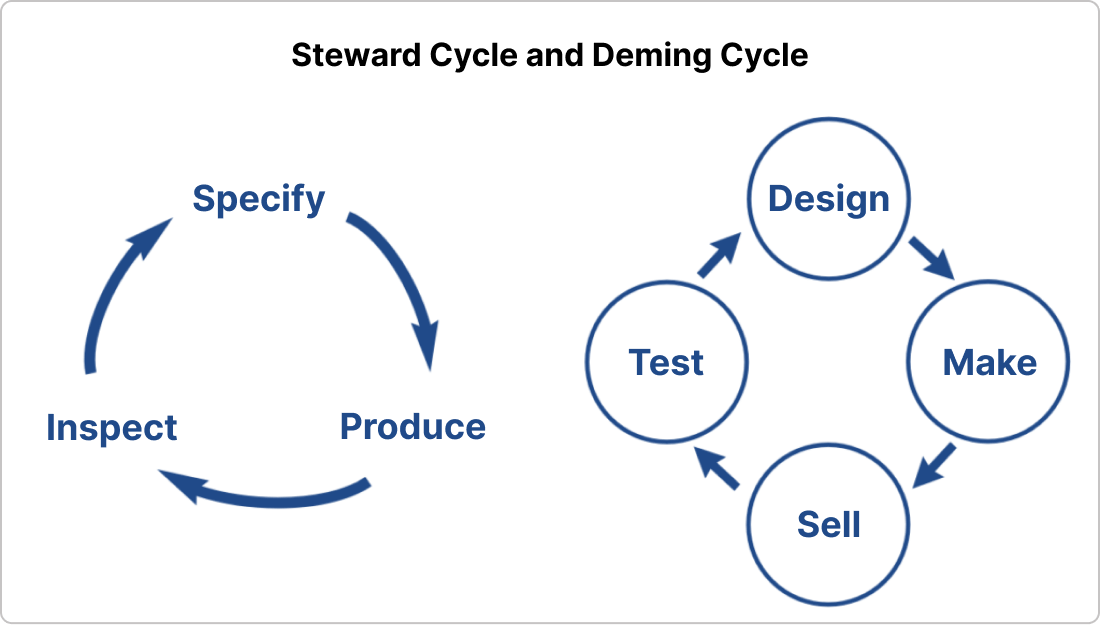
Image Credit: Lean Enterprise Institute
This model was redesigned by the Japanese Union of Scientists and Engineers (JUSE) in 1951 and became what we know today as a PDCA cycle.
How to Use the PDCA Cycle in Your Business
The PDCA (Plan-Do-Check-Act) cycle is often associated with W. Edwards Deming, but its origins can be traced through several significant contributions in the field of quality and management.
Over the years, PDCA has been incorporated into many continuous improvement methodologies and frameworks, such as Six Sigma, Lean Management, and other quality management systems.
It’s important to note that, although the PDCA cycle is often attributed to Deming, he always emphasized the importance of Shewhart’s work and often preferred to call it the "Shewhart Cycle".
Frequently Asked Questions (FAQs)
On the other hand, TQM is a comprehensive management approach that aims to improve the overall quality of products and services by involving all employees at every level of the organization. While PDCA is often used as a tool within TQM, they are not identical concepts.
What’s the difference between PDCA and PDSA?
PDCA (Plan-Do-Check-Act) and PDSA (Plan-Do-Study-Act) are iterative, problem-solving frameworks with a primary difference in the third step. In PDCA, the “Check” step focuses on evaluating the results of the implemented plan and comparing them to the desired outcomes.
In PDSA, the “Study” step emphasizes learning from the data collected during the “Do” phase and analyzing the results in-depth to understand the underlying causes of any discrepancies. Despite this distinction, PDCA and PDSA are often used interchangeably, and both facilitate continuous improvement within organizations.
Who developed the PDCA Cycle?
While the exact origin of the PDCA cycle is uncertain, it is commonly attributed to American statistician and quality management guru Dr. W. Edwards Deming. However, Deming himself credited Walter A. Shewhart, another American statistician and engineer, for the initial development of the concept.
Deming popularized the PDCA cycle during his work in post-World War II Japan, where he helped revitalize the country’s industry by adopting quality management principles. The PDCA cycle has since become a widely used management tool across various industries worldwide.
When should you use PDCA?
The PDCA cycle is a useful problem-solving framework for any organization looking to improve its processes and drive continuous improvement. It can be used in a variety of situations, such as addressing specific business problems or implementing new strategies and initiatives. The key is to involve all stakeholders and ensure open communication throughout the process. So, whenever your organization faces a challenge that requires problem-solving, the PDCA cycle can be an effective tool to use.
What are some potential barriers to implementing PDCA?
Some common barriers to implementing the PDCA cycle include a lack of commitment from leadership, resistance to change from employees, and insufficient resources or training. It is essential to address these potential obstacles and ensure buy-in from all levels of the organization for the successful implementation of the PDCA cycle. Additionally, proper training on how to effectively use the framework can help overcome any initial challenges and promote its use as a problem-solving tool within the organization.
Can the PDCA cycle be used in any industry?
Yes, the PDCA cycle can be applied to any industry or business sector. It is a versatile problem-solving framework that can help organizations of all sizes and types identify issues, implement solutions, and drive continuous improvement.
Whether it is manufacturing, healthcare, education, or service-based industries, the PDCA cycle can be tailored to fit the specific needs and goals of each organization. It is a universal tool that promotes collaboration and problem-solving across all departments and levels within a company.
Expert knowledge straight to your inbox
Are you a health and safety specialist, EHSQ Manager or have a passion for the health of your colleagues, corporate environmental protections or legal compliance? Then our newsletter is just what you need!
Subscribe to our newsletter
Create a PDCA Cycle Template Using DATAMYTE
DATAMYTE is a quality management platform with low-code capabilities. Our Digital Clipboard, in particular, is a low-code workflow automation software that features a workflow, checklist, and smart form builder. This tool lets you build your PDCA cycle template and other quality management templates, such as audit checklists, corrective action forms, risk assessments, and more.
DATAMYTE also lets you conduct layered process audits, a high-frequency evaluation of critical process steps, focusing on areas with the highest failure risk or non-compliance. Conducting LPA with DATAMYTE lets you effectively identify and correct potential defects before they become major quality issues.
PDCA Cycle at Somengil, the basis of the continuous improvement
The concern with quality is at the core of Somengil’s mission. Especially for companies where hygienization is one of the critical quality factors, there is a new industrial machine delivering top washing results. It is the MultiWasher, a state-of-the-art sustainable equipment that guarantees a perfect sanitization of any kind of utensils. See for yourself the performance of the MultiWasher and take your industrial washing processes to perfection.
The goal is to compare the results of the actions with the targets and to review and analyze the optimized process. This requires all employees to function as actors and observers. If necessary, the measures can or must be adjusted.
The first step is to analyze the status quo of an identified problem area, such as a process. This is done on a cross-departmental basis to identify potential and define sources of error. Based on this, the desired target state, metrics and actions to achieve the defined process goal are formulated.
Steps of the PDCA cycle
The four steps of PDCA are:
The PDCA cycle is designed to be continuously repeated for continuous improvements. By repeating this cycle, organizations can identify and fix issues, improve processes, and ensure that improvements are effective and sustainable.
What Are Some Real-Life Examples of PDCA?
In addition, Nestlé Waters is an example of how techniques such as Value Stream Mapping (VSM) can help illustrate the flow of materials and information from raw material to the final product. As a result of implementing this process, the bottling plant has experienced a significant increase in its process efficiency.
Lockheed Martin
Lockheed Martin operates in the aerospace industry and is a bright example of how the Kaizen methodology brings results to a company’s operations. Implementing the PDCA cycle has standardized the projects and increased the quality of the products and services by targeting a problem and solving it through multiple iterations. Improvements were noticed in the period 1992-1997 when the company made 38% reduction in manufacturing costs, 50% reduction in inventory, and a reduction in delivery time from 42 to 21.5 months. (Source: 6Sigma.com)
Example #3
Nike embraced Lean manufacturing with the belief that this continuous improvement philosophy is the foundation of their advanced sustainable manufacturing and empowering their workforce. To improve the quality of work conditions and deliver the highest-quality product while eliminating non-value-added activities, Nike implemented the PDCA cycle as part of their process improvement training. (Source: OpEx Learning)
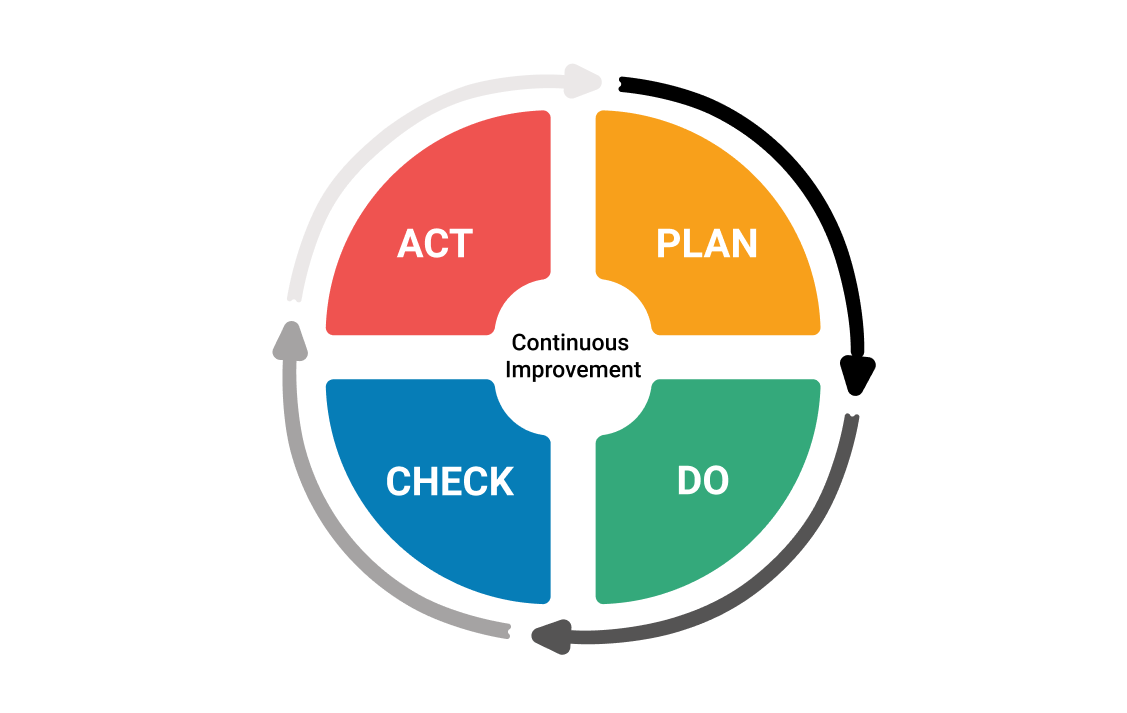
PDCA cycle is an iterative process for continually improving products, people, and services. It became an integral part of what is known today as Lean management. The Plan-Do-Check-Act model includes solutions testing, analyzing results, and improving the process.
For example, imagine that you have plenty of customer complaints about the slow response rate of your support team. Then you will probably need to improve the way your team works to keep customers satisfied. That is the point where PDCA comes into play.
Let’s take a closer look at the four stages of the PDCA process.
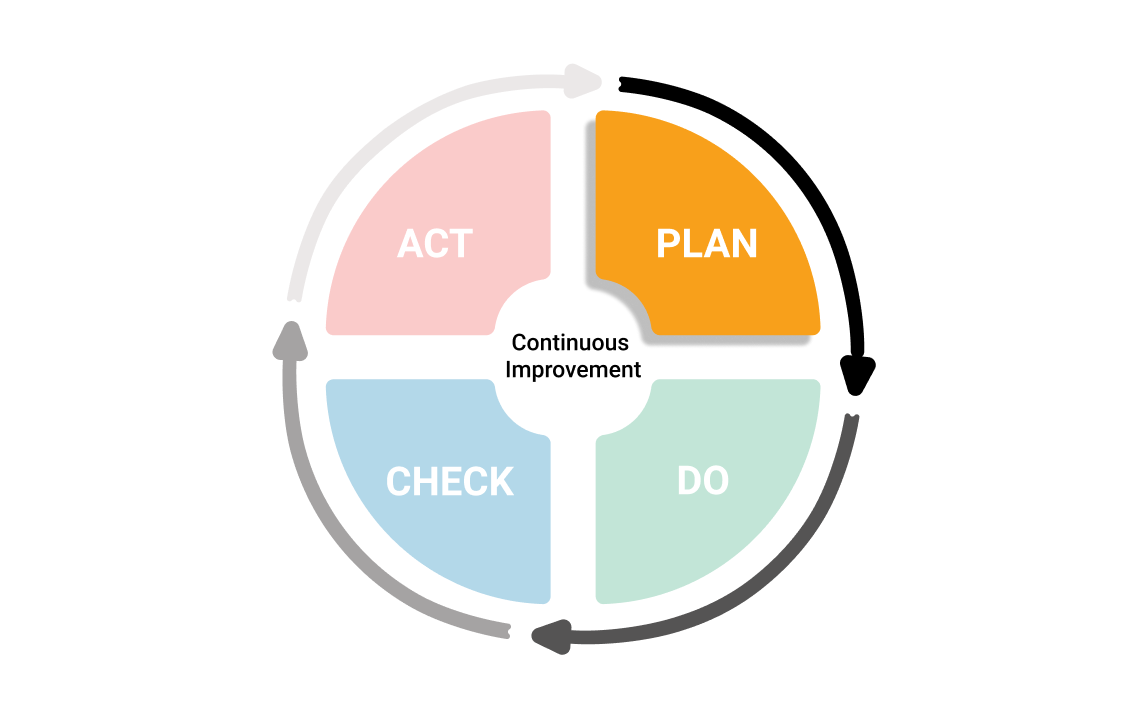
PLAN stage of PDCA cycle
At this stage, you will literally plan what needs to be done. Depending on the project’s size, planning can take a major part of your team’s efforts. It will usually consist of smaller steps so that you can build a proper plan with fewer possibilities of failure.
Before you move to the next stage, you need to be sure that you answered some basic concerns:
Keep in mind you and your team may need to go through the plan a couple of times before being able to proceed. In this case, it is appropriate to use a technique for creating and maintaining open feedback loops, such as Hoshin Kanri Catchball. It will allow you to collect enough information before you decide to proceed.
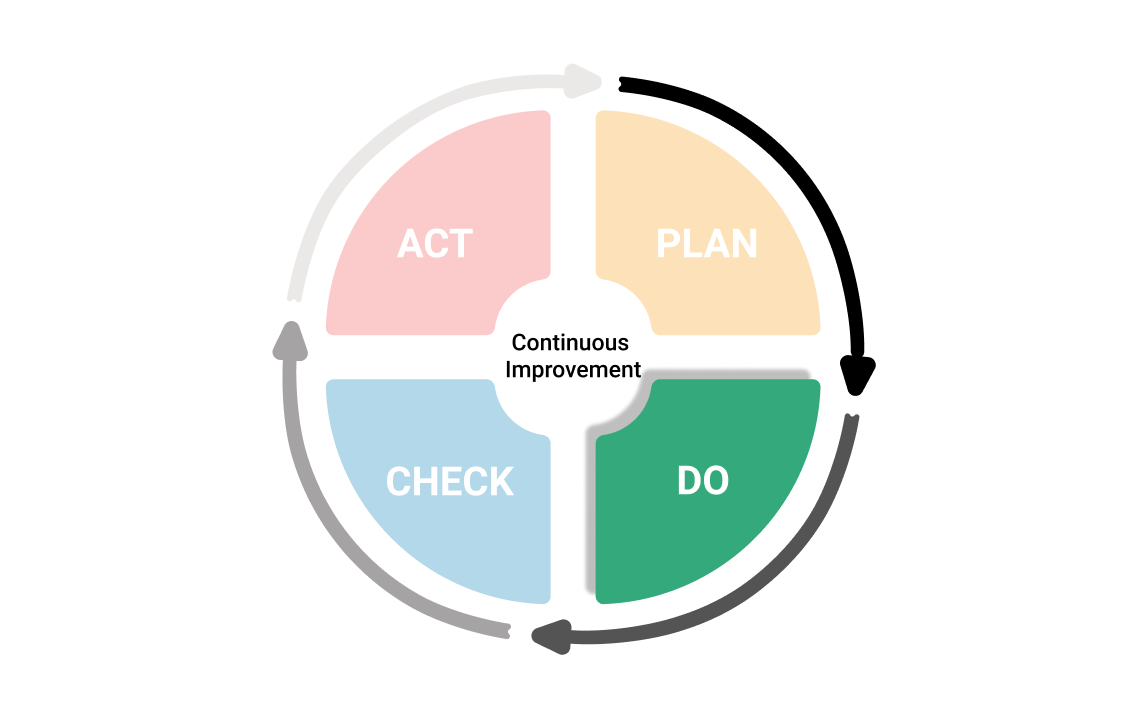
DO Stage of PDCA cycle
After you have agreed on the plan, it is time to take action. At this stage, you will apply everything that has been considered during the previous stage.
Be aware that unpredicted problems may occur at this phase. This is why, in a perfect situation, you may first try to incorporate your plan on a small scale and in a controlled environment.
Standardization is something that will definitely help your team apply the plan smoothly. Make sure that everybody knows their roles and responsibilities.
10 Years Kanban Experience In 1 Free Book.
Project Manager’s Guide to Kanban
CHECK stage of PDCA cycle
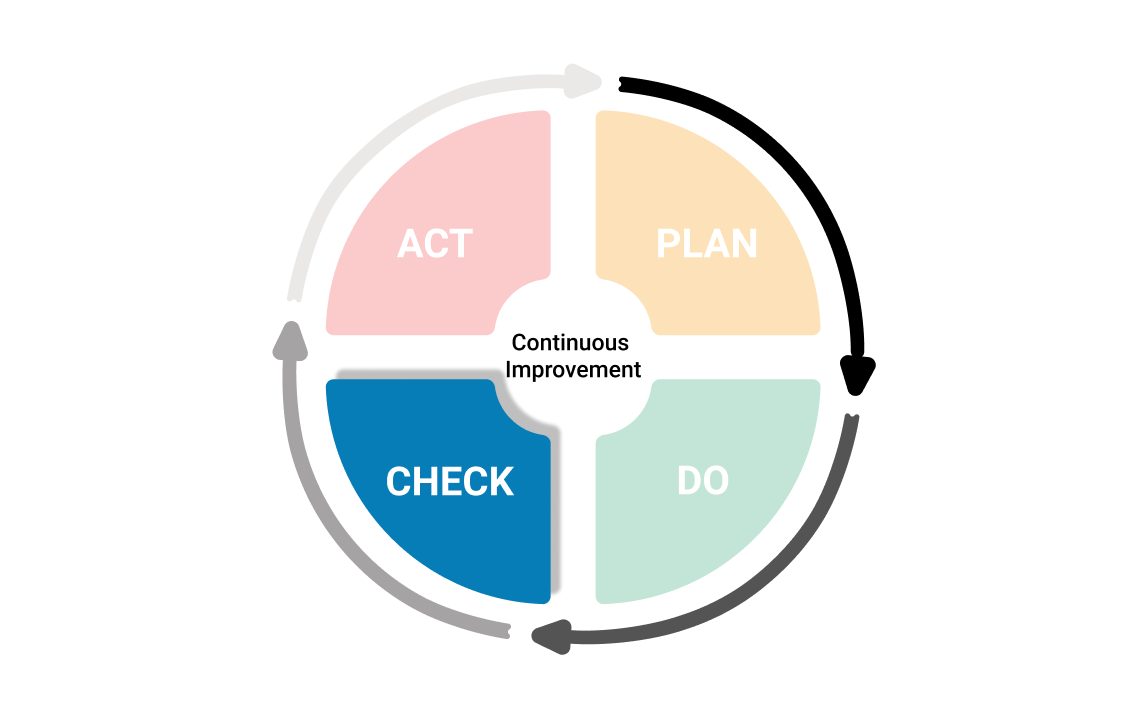
This is probably the most important stage of the PDCA cycle. If you want to clarify your plan, avoid recurring mistakes, and apply continuous improvement successfully, you need to pay enough attention to the CHECK phase.
This is the time to audit your plan’s execution and see if your initial plan actually worked. Moreover, your team will be able to identify problematic parts of the current process and eliminate them in the future. If something goes wrong during the process, you need to analyze it and find the root cause of the problems.
ACT stage of PDCA cycle
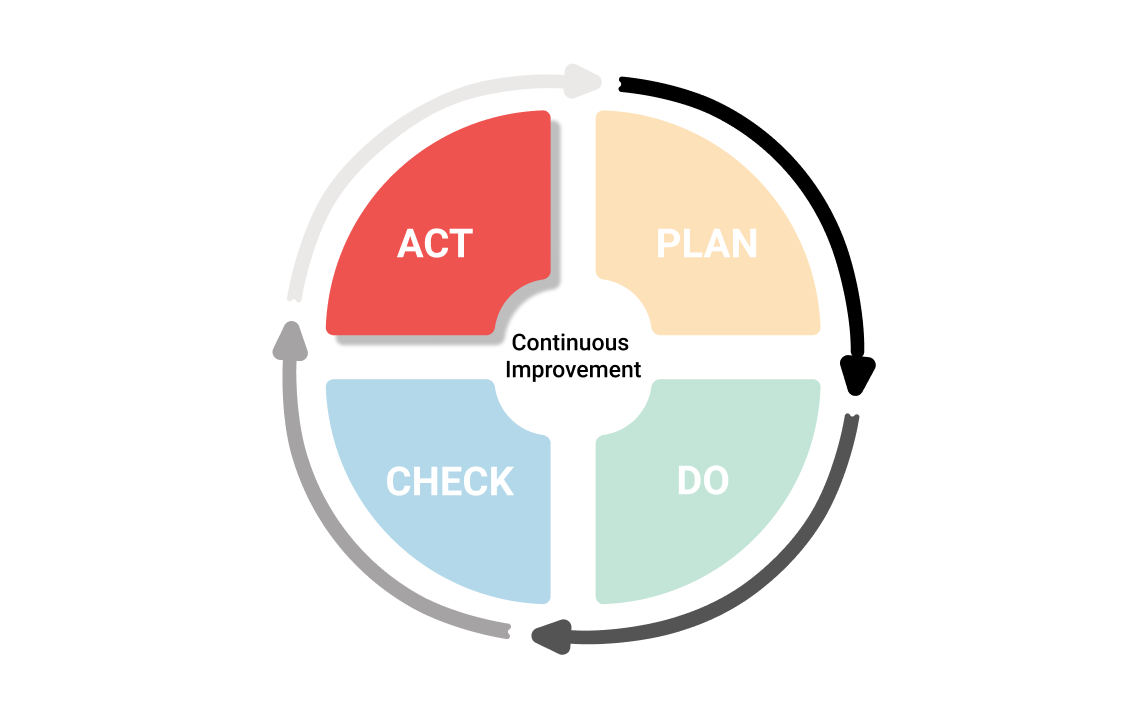
Finally, you arrive at the last stage of the Plan-Do-Check-Act cycle. Previously, you developed, applied, and checked your plan. Now, you need to act.
If everything seems perfect and your team managed to achieve the original goals, then you can proceed and apply your initial plan.
It can be appropriate to adopt the whole plan if objectives are met. Respectively, your PDCA model will become the new standard baseline. However, every time you repeat a standardized plan, remind your team to go through all steps again and try to improve carefully.
Stages of PDCA
Plan stage is the foundation of the PDCA cycle, where initial problem identification, data gathering, and root cause analysis occur. In this phase, objectives and processes are established, and a detailed plan of action is developed to address the issues at hand. It is crucial to set measurable targets and involve all relevant stakeholders to ensure the plan is aligned with the desired outcome and can be effectively implemented in the subsequent stages. In this stage, organizations identify a problem or opportunity for improvement, set objectives, and develop a plan to achieve those objectives. Key steps include:
Do stage is where the theoretical plan is put into action. Activities, experiments, or changes outlined in the plan are implemented on a small scale to minimize risk. This stage is critical for testing the effectiveness of the plan, allowing for the collection of valuable data and insights, which will later be analyzed in the Check stage. In the ‘Do’ stage, organizations implement the action plan developed in the ‘Plan’ stage. This may involve:
Check stage, the implemented changes are monitored and evaluated to determine their effectiveness against the objectives set in the Plan stage. Data and results are methodically collected and analyzed to find discrepancies and outcomes. This crucial evaluation phase informs whether the changes produced the expected results and helps identify any variations that need to be addressed before widespread implementation. During the ‘Check’ stage, organizations evaluate the results of their actions against the objectives set in the ‘Plan’ stage. This involves:
Act stage is the final step in the PDCA cycle, where adjustments and improvements are made based on the evaluation conducted in the Check stage. It involves implementing successful strategies on a larger scale and standardizing new, efficient processes. If the results are not satisfactory, this phase also dictates a revision of the plan or a complete cycle restart to further refine and enhance the process before it is widely adopted. In the final stage, organizations take corrective action based on the analysis from the ‘Check’ stage. Actions may include:
Using PDCA in innovation
PDCA can be employed in innovation, especially when introducing a new product in a production environment or implementing a new production process/equipment. We aren’t including the product or process development part, which generally employs more specific methods.Here’s how introducing new products or processes in production can be tackled.
After this "Act" phase, the cycle can begin again to enable continuous improvement.
Why Is PDCA Important for Your Business?
The PDCA methodology is widely used for problem-solving and to create quality process improvements. By deploying this model, organizations aim to enhance their internal and external processes by eliminating any issues along the way of the work process.
The cyclical nature of this model allows teams to identify and remove defects early in the process and restart the cycle until the desired outcome is reached. This increases efficiency and eliminates ineffective elements until the optimal solution can be identified.
Because of the continuous approach of PDCA, organizations can use this model to gather relevant information before considering whether to progress with a plan or make improvements. This data-driven approach provides a ground basis for organizations’ continuous improvement of processes, products, services, and people.
When can the PDCA Cycle be used?
The PDCA Cycle can be used by all types of organizations and sectors, and is applicable both in small businesses and large organizations, in industry or service sectors. Its versatility allows it to be used whenever there is a desire to improve products, processes, or results.
In conclusion, the PDCA Cycle is a quality management tool to be considered by companies that aspire to stay at the forefront of their industry. Testing small changes first, and then implementing successful tests on a larger scale is an important step in ensuring the quality of products and processes in a controlled way. You can also combine the PDCA Cycle with other quality management methodologies, thus creating your own portfolio of tools adjusted to your company’s reality.