
Операционное совершенство – это метод управления бизнесом, который направлен на создание культуры непрерывного совершенствования. Он делает это, побуждая сотрудников вкладываться в успех бизнеса. Подход направлен на то, чтобы держать сотрудников и управление в курсе потока ценности от производства к потребителю.
Когда сотрудники понимают свою роль в организации, это помогает им быстро выявлять и решать проблемы с минимальными помехами. Операционное совершенство создает менталитет, ориентированный на потребителя, который поощряет непрерывное совершенствование для повышения операционной гибкости, долгосрочной эффективности и устойчивого роста.
- Введение
- Установленные методологии операционного совершенства
- Проверка на улучшение процесса
- Определение узких мест оборудования и возможностей для автоматизации и модернизации. Ответьте на вопрос, используется ли оборудование в полной мере.
- Обеспечение стандартизации в рабочих процедурах, наличие правильных рабочих инструкций и автоматизация рабочих процессов.
- Обеспечение правильного проектирования и настройки петель управления процессом для оптимального процессного потока.
- Преимущества аудитов по улучшению процесса
- Изменяющийся ландшафт производства
- Роль систем производственного совершенства
- Инсайты из сообщества
- Создание культуры непрерывного улучшения
- Принципы, определяющие Производственное Совершенство
- Measure effectiveness continuously
- Applying Operational Excellence to Your Organization
- Focus on Delivering Value to the Customer
- Clearly Communicate Business Goals Internally
- The key to manufacturing excellence is using data to make informed decisions.
- How to add tech to lean for operational excellence
- Ownership through robust understanding and conviction
- Evolved roles and capabilities to empower and engage the front line
- Make training a priority for your employees.
- Operational Excellence and Continuous Improvement for Changing Market Conditions
- Define clear roles and responsibilities.
- What is Manufacturing Excellence?
- Manage Your Inventory Effectively
- Understanding the Principals of Operational Excellence
- Identify Your Most Important Customers
- Revise the plan as necessary.
- Optimise Your Production Processes and Systems
- Connected Worker® and Operational Excellence
- Take a comprehensive approach to data gathering and analysis.
- Advantages of Implementing Operational Excellence
- The next step
- Technology is generating real operational value
- Changing people’s work, not just their tech
- Advanced Technology Facilitates Operational Excellence
- Business Process Automation
- IT Operations Automation
- Integration
- Navigating the Path to Manufacturing Excellence
- Define Your Goals and Objectives.
- Implement Lean Manufacturing Principles.
- Invest in Technology and Automation
- Foster a Culture of Continuous Improvement.
- Develop a Skilled and Engaged Workforce.
- Use Data When Making Decisions
- Leverage the Experience of Your Employees
- Author Bio
- Conclusion
Введение
Производственное совершенство заключается в поставке продукции высокого качества с постоянно низким уровнем дефектов. Это вызов, с которым сталкиваются многие компании сегодня, но который может быть преодолен с правильными стратегиями и тактиками. В этой статье мы рассмотрим, как можно достичь производственного совершенства в вашем бизнесе, определяя и внедряя передовые практики на каждом этапе операций: закупка сырья, планирование производственных графиков на основе тенденций спроса и предпочтений потребителей, эффективное управление запасами, чтобы они не устарели быстро или необходимые затраты снижали прибыль и многое другое!
К концу 20-го века методы управления lean мигрировали из своего родного места в Японии, чтобы преобразить операции производства и процессные промышленности по всему миру. В тяжелых отраслях, таких как горнодобывающая, целлюлозно-бумажная и нефтегазовая промышленность, лидеры сегодня могут указать на десятилетия операционного совершенствования благодаря методам и принципам lean. Но многое изменилось с тех пор, как был разработан метод lean. Наступила следующая фаза операционного совершенства: технологии промышленности 4.0, такие как передовая аналитика, ИИ и подключенное оборудование, помогают лидерам тяжелой промышленности увеличить производительность, гибкость, устойчивость и устойчивость истеблишментов.
Однако проблема для многих организаций заключается в том, что до сих пор результаты от этих технологий были разнообразными. Хотя многие компании провели успешные пилотные проекты или локальные развертывания, лишь немногие смогли масштабировать свои инициативы, чтобы в полной мере воспользоваться новыми технологиями на предприятии. Опыт немногих указывает на новый тип технологически ориентированного операционного совершенства.
Установленные методологии операционного совершенства
Модель Шинго операционного совершенства служит фундаментальной основой для многих принципов. Однако многие компании адаптировали этот метод для применения в своих отраслях и индустриях. Другие методологии операционного совершенства включают в себя:
- Lean Manufacturing: приоритизирует эффективность, максимизируя производительность сотрудников и уменьшая отходы
- Six Sigma: фокусируется на стандартизации процессов для устранения ошибок и уменьшения дефектов
- Кайзен: методично и постепенно подходит к изменениям через вовлечение сотрудников в непрерывное улучшение
Научное обучение: использует подход, основанный на доказательствах, который включает испытания и ошибки, наблюдение и итеративное улучшение процессов
Окапи: использует конкретные, измеримые, достижимые, релевантные и своевременные (SMART) ключевые показатели производительности для поощрения устойчивого улучшения
Хошин: направляет все части организации на достижение конкретных бизнес-целей
Гибкость операционного совершенства позволяет каждой компании модифицировать свой подход под свои бизнес-потребности. Нет единственного правильного способа достичь операционного совершенства. Скорее, целью должно быть улучшение всех аспектов вашей организации с операционной точки зрения.
Изображение предоставлено из общественного доступа.
Жесткие навыки, такие как Шесть Сигм и Линейное Производство, могут прийти на ум, когда вы представляете себе хорошо управляемое производственное предприятие. Однако мягкие навыки также очень важны для достижения производственного совершенства. Межличностные способности позволяют сотрудникам сотрудничать, адаптироваться и обеспечивать непрерывное улучшение. Вот почему развитие ваших социальных навыков является ключом к разблокированию успеха в производстве.
Аргументы в пользу мягких навыков
Техническое мастерство имеет свои пределы. Сотрудники также должны эффективно общаться, решать проблемы и управлять отношениями. Сильные мягкие навыки делают команды способными:
- Сотрудничать и адаптироваться к изменениям
- Решать конфликты и проблемы
- Обеспечивать связь между отделами и работниками
Без мягких навыков даже самые квалифицированные сотрудники будут испытывать затруднения в работе вместе и достижении производственных целей. Технические навыки обеспечивают точность, а мягкие навыки обеспечивают гармонию.
Секретный соус Тойоты
Культура, сосредоточенная на людях, Тойота знаменита своим операционным совершенством. Но техническое мастерство – это только часть уравнения. Другой важный ингредиент – это культура Тойоты, ориентированная на людей, построенная на мягкие навыки.
Тойота активно развивает рабочие характеристики, такие как скромность, командная работа и непрерывное обучение. Менеджеры оцениваются по показателям эмоционального интеллекта. Этот острый упор на человеческие ресурсы позволяет сотрудникам безупречно работать вместе. Мягкие навыки смазывают шестеренки производственного гиганта Тойоты.
Точно так же важно, как и статистический контроль процессов – Тойота понимает, что превосходство на техническом уровне бесполезно без коллективного эмоционального интеллекта.
Вывод: Инвестировать в мягкие навыки
Данные не лгут. Компании, стремящиеся к производственному совершенству, должны внедрить мягкие навыки на всех уровнях. В противном случае несогласованность, конфликты и сопротивление изменениям только замедлят даже самые беспрепятственные производственные системы.
Технические возможности обеспечивают инструменты для успеха – мягкие навыки обеспечивают командную работу для их достижения. Работники с коммуникативными навыками, критическим мышлением и эмоциональным интеллектом помогают производству гармонично функционировать.
Так что, вместо того чтобы пренебрегать чувствительными навыками, сделайте мягкие навыки приоритетом. Они являются особым соусом для разблокирования производственного великолепия.
Winnie Auma Otieno
В большинстве компаний менеджеры и топ-руководители понимают важность изменений во многих аспектах для использования силы процессов, но не уверены, что именно нужно изменить или улучшить и как это должно быть сделано. Неопределенность проявляется в колебательных решениях и неправильном планировании, не исправляющих мероприятиях, бесконечных дебатах и неэффективных обсуждениях, в неоправданных удовлетворениях и одинаково необоснованных отчаяниях, в ошибках и переделках, длительных сроках выполнения работ, заброшенных усилиях и жалобах клиентов, отсюда и необходимость подхода к улучшению процесса от начала до конца.
Проверка на улучшение процесса
Проверка улучшения процесса рассматривает 3 основных параметра, а именно:
Определение узких мест оборудования и возможностей для автоматизации и модернизации. Ответьте на вопрос, используется ли оборудование в полной мере.
Обеспечение стандартизации в рабочих процедурах, наличие правильных рабочих инструкций и автоматизация рабочих процессов.
Обеспечение правильного проектирования и настройки петель управления процессом для оптимального процессного потока.
Преимущества аудитов по улучшению процесса
Цель – партнерство с нашими клиентами для:
- Максимизации производительности и эффективности
Это приводит к:
- Улучшенному удовлетворению клиентов
Помогает улучшить вклад.
В современной глобальной экономике производители сталкиваются с увеличивающимся давлением оставаться конкурентоспособными, соответствовать строгим регуляторным требованиям и последовательно предоставлять продукцию высокого качества на рынок. Для достижения этих целей многие лидеры отрасли обратили внимание на системы производственного совершенства (MES) в качестве всеохватывающего решения для оптимизации операций, увеличения эффективности и поддержки непрерывного совершенствования. В этой статье рассматривается неотложная необходимость MES и как она может способствовать успеху производственных организаций в современном динамичном бизнес-ландшафте.
Изменяющийся ландшафт производства
Производство преодолело долгий путь от традиционных ручных процессов к высокоавтоматизированным и цифровизированным средам. С развитием технологий отрасль столкнулась с парадигмальным сдвигом в том, как продукты проектируются, производятся и поставляются. Хотя эти инновации несомненно улучшили производительность, они также создали новые вызовы, связанные с сложностью процессов, управлением данными и соблюдением нормативов.
Роль систем производственного совершенства
Система производственного совершенства охватывает ряд взаимосвязанных инструментов, методологий и лучших практик, направленных на оптимизацию каждого аспекта производственного процесса. От управления цепочкой поставок до контроля производства, обеспечения качества и далее, MES обеспечивает бесперебойную координацию и синхронизацию операций. Основные компоненты MES могут включать:
В сегодняшней конкурентной среде производственные организации должны внедрять трансформационные технологии и методики, чтобы процветать и лидировать в своих отраслях. Система Производственного Совершенства предлагает идеальное сочетание инноваций, стандартизации и непрерывного совершенствования, необходимых для успешного выступления на быстро меняющемся рынке.
Путем внедрения СПС производители могут оптимизировать свою деятельность, обеспечить соответствие нормативам, оптимизировать использование ресурсов и последовательно поставлять высококачественную продукцию своим клиентам. Поскольку компании стремятся оставаться гибкими, отзывчивыми и эффективными, необходимость в Системе Производственного Совершенства становится более явной, чем когда-либо. Примите путь к совершенству и разблокируйте полный потенциал ваших производственных способностей с помощью СПС.
Инсайты из сообщества
Прежде чем начать измерять производительность своих сотрудников, важно определить проблему. Вам нужно знать, каков успех для вашей организации и насколько текущее состояние далеко от этой цели. Это может помочь определить вашу стратегию и реализацию стратегии. Хороший способ начать этот процесс – установить цели для каждого отдела или команды в организации.
После определения этих целей пришло время для действий! Следующим шагом является установка конкретных метрик, по которым вы будете измерять, достигли ли отдельные области своих целей, чтобы их можно было считать успешными или нетуспешными в достижении их задач за определенный период времени (например, три месяца). Примеры включают:
- Количество произведенных продуктов в день по сравнению со средним значением за последний год – вы хотите здесь улучшения!
Создание культуры непрерывного улучшения
Сосредотачивайтесь на том, что нужно сделать.
Как менеджер по производству, у вас есть много возможностей сконцентрироваться на операционном совершенстве. Вы можете использовать эти возможности для изучения метрик вашей компании и оценки, где они уступают или где есть место для улучшения. Например:
Каково среднее время выполнения каждой части процесса? Оно слишком длинное? Слишком короткое? Влияет ли это на удовлетворенность клиентов или наценки?
Если у клиента возникают проблемы с прохождением через нашу очередь, как мы узнаем, что они ждали нас из-за задержек в других отделах (например, материалы), из-за неудачного времени между двумя процессами (например, один этап требует двух разных видов сырья) и т.д.?
Сколько человек работает над любой задачей в любой момент времени – и как это число должно измениться со временем в зависимости от спроса/необходимой ёмкости этого дня/недели/месяца/годового цикла.
Принципы, определяющие Производственное Совершенство
Производственное совершенство опирается на основные принципы, которые определяют путь к операционному успеху. Давайте рассмотрим эти пять фундаментальных принципов, лежащих в основе производственного совершенства:
Integrating these principles cultivates a culture of excellence, permeating every level of the organization. This approach not only improves production efficiency and product quality but also boosts workforce engagement and motivation. Together, these outcomes drive the achievement of manufacturing excellence.
Measure effectiveness continuously
The most effective way to measure effectiveness is through continuous improvement. It’s important to clearly define your goals and how you want to achieve them, then make sure that the system or processes in place can be adjusted as necessary. For example:
If you want to reduce waste by 10 present, identify what caused it and work with employees to eliminate it within your company culture.
Ensure every employee understands why they should care about reducing waste–and how their efforts will help them reach their goals–so that everyone feels comfortable making changes together.
Applying Operational Excellence to Your Organization
Implementing operational excellence requires a workforce that continually improves processes. This means establishing clear goals and expectations while understanding that the process is fluid.
Operational excellence is not a fixed state; it’s a constant process of review that motivates employees and leaders to continually improve.
Reviewing your key performance indicators (KPIs) in operational, workforce, and financial aspects can help in determining metrics and defining future goals. While every company’s solution will be different, operational excellence should always focus on delivering value to the customer and facilitating open communication.
Focus on Delivering Value to the Customer
The primary goal of operational excellence is optimizing the customer experience. From an operational standpoint, this means creating high-quality products promptly and at a competitive price.
Digital tools can help you analyze business trends and establish areas of improvement. By adopting real-time data collection, you can measure your organization’s performance and discover ways to add more value for your customers.
Clearly Communicate Business Goals Internally
Employee buy-in is a critical aspect of operational excellence. Provide clear, actionable goals and expectations to ensure employees actively engage in continuous improvement.
Instead of trying to correct issues by focusing on employee performance, operational excellence pays attention to the processes themselves. This aligns employees and leadership in pursuit of a common goal.
Use mobile technology like Parsable Connected Worker® to keep everyone connected, informed, and focused on continuous improvement.
The key to manufacturing excellence is using data to make informed decisions.
The key to manufacturing excellence is using data to make informed decisions.
Data is the foundation of manufacturing excellence; without it, you can’t achieve operational excellence.
How to add tech to lean for operational excellence
Why isn’t every company working in this way? Our observations of digital initiatives in a wide range of organizations, along with our conversations with their senior leaders, reveal a handful of reasons. New technologies don’t always deliver what they promise. Companies may focus their efforts on the technical aspects of new digital use cases, for example, without considering the wider principles and practices of operational excellence. Or they may lack the internal capabilities to develop, deploy, and operate sophisticated digital tools. Finally, executives at many organizations fail to take their teams along on the digital journey. Operational experts, such as team leaders, process control engineers, and metallurgists, tend to ignore tools and processes they don’t understand or trust.
Digitization can dramatically enhance the power of traditional approaches to operational excellence but doesn’t replace the need for strong organizational foundations. Today’s leading players overcome these barriers by adopting a holistic approach to operational excellence and ongoing improvement. That approach addresses all the technological, organizational, and human dimensions required for sustained success.
Ownership through robust understanding and conviction
High-performing organizations structure teams in working cells linked to value streams (such as end-to-end operations, reliability, or planning) rather than the value chain’s individual process components (mine operations, plant operations, technical services, and the like). This structure empowers managers to make decisions across the entire value chain and therefore aligns objectives and performance metrics with bottom-line business results. At another mining company, a value-stream product owner with full visibility over the whole process makes final operational decisions at an integrated operations center. That manager directs a multidisciplinary team of processing and technology experts who assist in decision making.
Evolved roles and capabilities to empower and engage the front line
At companies that have succeeded in using technology to achieve operational excellence, roles and capabilities are adapted to suit the new way of working required to sustain and continuously improve technology solutions. Product owners are empowered and accountable to ensure that their teams meet the objectives and key results defined for each value stream. Data scientists and engineers use data collected throughout the process to build optimization models that assist in decision making. “Translators” serve as a communication bridge between processing experts and the digital team. Finally, frontline leaders with access to more data are supported by everyday insights from AI tools. They also have more scope to improve operations, pilot new ideas, and collaborate with their colleagues upstream and downstream.
In another copper-mining operation, for example, the product owner of the multidisciplinary operations cell now runs day-to-day operations. That manager, who understands insights from prescriptive analytical models, has a profile rather different from those of traditional mine or plant managers. Their roles too have evolved, to focus on ensuring the optimal condition of assets, so that the production cell can operate at its maximum potential.
Combining new digital approaches with the proven principles and practices of operational excellence opens a world of possibilities for heavy industries. Early adopters have already reaped substantial benefits: a step change in performance and employee engagement.
Yet the journey to digitally enabled operations isn’t trivial. It requires energy, vision, and persistence by senior leaders, who can ensure that their organizations stay on the right path by continually revisiting three fundamental questions. First, are we applying the core principles of operational excellence in everything we do? Second, are we using the best available technologies to support our operations? Finally, are we using those technologies in the most effective, sustainable way?
Julio Gregorio and Diego Zuniga are associate partners in McKinsey’s Santiago office, where Ferran Pujol is a partner; Richard Sellschop is a senior partner in the Stamford office.
The authors wish to thank Xavier Costantini, William Fookes, David Hamilton, Ted Iverson, Sohil Kalra, Erik Shaeffer, and Joris Wijkpema for their contributions to this article.
Explore a career with us
Operational excellence can benefit any industry, from product manufacturing to retail sales. Some industries have already established a standard of operational excellence, including:
Make training a priority for your employees.
Provide training on new processes and procedures. Provide training on how to use the new technology.
Train your employees to work in teams and leverage their strengths to help each other succeed, even if they don’t know each other well yet.
Train your employees on how to communicate effectively with each other and with customers/clients/suppliers (in written or verbal form). This can help prevent misunderstandings that lead to confusion or conflict among staff members who are working toward the same goal of providing excellent service at all times! It also helps build trust between workers so that everyone knows what their role is within the company’s goals & objectives!
Operational Excellence and Continuous Improvement for Changing Market Conditions
In today’s ever-changing global economy, complex business management requires continuous improvement. Businesses must still focus on return on investment (ROI) and improved efficiency. However, competitive advantages depend on flexibility and resiliency in the face of market shifts, new technology, and evolving conditions.
Operational excellence creates a competitive advantage by creating a company culture of continuous improvement. This allows complex business environments to thrive and grow by encouraging problem-solving and overall process improvement.
Define clear roles and responsibilities.
Defining clear roles and responsibilities will help you achieve operational excellence.
This is another one of those things that sounds obvious, but it’s not always easy to do. If people don’t know what they’re supposed to be doing, then it’s likely they won’t do it well. So make sure that everyone knows their role in the company and how they fit into the bigger picture at hand–and if possible, assign them tasks or projects with clear goals so that everyone understands what they need to accomplish during their day-to-day work activities (such as “make sure all orders are received by noon”).
If this seems too much work for your team members right now, consider using a job description template. It’ll help employees understand clearly defined goals while also giving them an idea of who else may be interacting with them daily; this helps ensure everyone understands where things stand going forward.
What is Manufacturing Excellence?
Manufacturing excellence is the pinnacle of operational performance, where quality, cost, delivery, safety, and morale converge for optimal productivity and growth. It requires a holistic approach, encompassing process optimization, waste reduction, workforce empowerment, and safety. Attaining and maintaining excellence provides a competitive edge, driving productivity, customer satisfaction, and bottom-line results. It’s a vital strategy for survival and success, leading to sustainable growth and resilience in a dynamic manufacturing landscape.
Manage Your Inventory Effectively
Inventory is a key component of your supply chain, and it’s important to manage it effectively. Inventory refers to what’s in the warehouse or distribution centre and how much you have on hand at any given time. The optimal level of inventory depends on your business model and customer demand, but it can be as low as one week’s worth of product (or less) if you sell primarily online or quickly deliver items that customers don’t need right away (like sample sizes).
Inventory levels impact cash flow: When your inventory is too high, there may be delays in getting products out into the market–and once they’re there, customers will want them right away rather than waiting until they are ready for pickup by an employee or distributor.
Understanding the Principals of Operational Excellence
The principles of the Shingo model aim to make it easier for value to flow from the organization to the customer. By communicating purpose, you create a culture focused on systemic process improvement. Your organization ensures that each team member knows their role and acts in line with the organization’s goals and principles.
Identify Your Most Important Customers
Identifying your most important customers is an important step in manufacturing Excellence. It’s also a key part of achieving Operational Excellence.
Revise the plan as necessary.
As a manufacturer, it’s important to be flexible and adaptable; change is inevitable. You’ll need to make changes based on your experience and business operations insights. If a new process proves more efficient than what you were doing before, then go for it! That may mean hiring additional staff members or outsourcing some tasks altogether. Or perhaps there’s just less work overall because of last year’s slump in sales? Whatever the case may be–and no matter how small or large–you should always be willing to make changes so that you can keep improving yourself as an organisation.
Optimise Your Production Processes and Systems
You can optimise your production processes and systems with a combination of data, technology, lean manufacturing principles, and kaizen mindsets.
Use Data to Make Informed Decisions: Most companies don’t have enough information about their processes and systems to optimise them effectively. Data-driven decision-making is essential if you want to make informed decisions about how best to improve efficiency or reduce cost.
Use Technology for Efficiency Improvement: The most efficient way to run a business is by using technology as its tool in implementing these changes so that it can be measured against other companies who have implemented similar strategies in their operations already — this will help accelerate improvement within your organisation too!
Connected Worker® and Operational Excellence
Also, you can make and change procedures and training info to keep your employees updated on the newest organizational changes. With Parsable, your organization gets the tools to get immediate insights and easily adjust operations to match new needs
Contact Parsable today to request a demo and see how our Connected Worker® technology can enhance your operational excellence.
Ready to revolutionize your operational workflows? Experience the power of Parsable’s Connected Worker® software firsthand. Schedule a demo today and discover how our solution can streamline your operations by digitizing your frontline.
Take a comprehensive approach to data gathering and analysis.
Data is the key to good decision-making. It provides information that can be used to identify and solve problems, optimise your business processes, and improve customer service and products.
Data collection should be a part of every process you use to run your business–from sales to manufacturing. The data collected should be analysed in order to provide valuable insights into what works best for your company so that you can make changes on an ongoing basis as needed.
Advantages of Implementing Operational Excellence
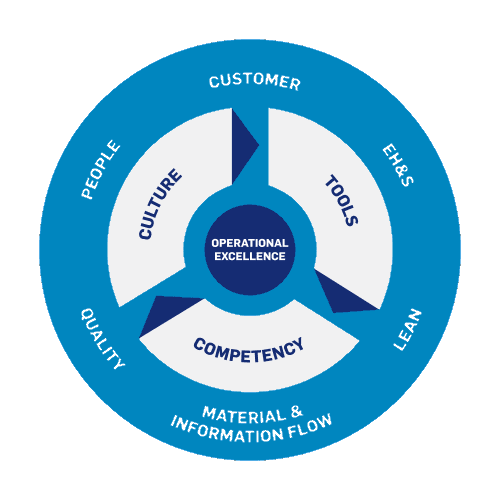
Operational excellence encourages your company to look at its internal operations for areas of improvement. A critical approach that encourages continuous change can lead to numerous benefits, including:
The next step
A handful of heavy-industry companies have found a new way to operate that is revolutionizing the way they create value in operations. The combination of lean and technology is allowing these companies to create new augmented production systems that capture the full value of digital at scale in a sustainable manner. The benefits include year-on-year improvements in productivity, environmental protection, safety, employee engagement, and customer satisfaction (Exhibit 1).
Such companies have adapted some of the core principles underlying lean production to suit an environment where advanced technologies are applied in everyday operations. Those principles have guided the redesign of processes, management systems, and organizations to make truly effective use of technology.
Technology is generating real operational value
Scientific thinking is the principle that inspires lean companies to use hard evidence and experimentation to continually improve their operations. Lean has always relied on rigorous, fact-based decision making. But the analytical tools available to most lean practitioners force them to focus their attention on just a few variables at a time. For that reason, processes in traditional lean companies tend to improve incrementally.
Digitization helps companies take scientific thinking to a new level of sophistication. Connected, digitized value chains give teams access to much richer data on the performance of processes. Advanced analytical models allow those teams to gain deeper insights from the data by revealing subtle cause-and-effect relationships hidden among thousands of data points. With these tools and the right capabilities, companies can apply scientific, data-driven problem solving to a wider range of challenges—and get better answers faster than previously possible.
Digitization also transforms systemic thinking—another core lean principle. Because technology can bring together data from across the value chain, companies can take a holistic, end-to-end approach to optimizing processes. In many heavy-industry sectors, for example, processes encounter high levels of variability caused by differences in input materials, process conditions, and demand. Operators in traditional production systems can only react to that variability, by altering parameters on the fly to keep processes under control. Digital and advanced-analytics technologies help companies move to a proactive approach. By using upstream data and detailed process models to adjust parameters before variability hits, these companies can dramatically improve the stability of their production systems.
At one copper mine, for instance, operators now use an end-to-end model to change their processes as the characteristics of ore change over time. Data on the quality of ore is collected at the mine and transmitted to the processing plant several hours before the ore arrives. The processing plant’s AI model identifies changes in the characteristics of the ore and makes recommendations—timed to coincide with the precise moment it enters the mill—for adjustments to water pressures, grinder settings, and other variables. If the characteristics of the ore require it, similar recommendations are passed on to the teams operating downstream process steps (Exhibit 2).
Changing people’s work, not just their tech
When this new approach was introduced, the copper mine’s organization also changed: a permanent continuous-improvement squad is now responsible for copper production from the mine to the plant. The KPIs that operators monitor now reflect this end-to-end thinking. All operators have visibility into the ways their actions affect upstream and downstream variables, for example. Since the introduction of the new approach, the mine’s output has increased by 3 to 7 percent.
Another company, this time in the pulp and paper sector, has adopted a similar augmented approach to maximize yields and optimize resource consumption in its pulp production process. To trace the characteristics of pulp fiber, the company uses a set of models beginning at the forest floor and ending at the point of dispatch to the customer. These models, used to adjust parameters several times per shift, change the mix of wood chips, the chemicals used, and the process settings to ensure that customer requirements are met in the most efficient way.
Advanced Technology Facilitates Operational Excellence
Digital technology is a critical component of a successful operational excellence strategy. To streamline operations, you must first be able to identify areas of improvement. The latest business management technology can facilitate a smooth transition to operational excellence and foster continuous improvement.
Business Process Automation
Often, mundane tasks require time and effort from employees whose skills can be better applied elsewhere. Business automation programs can help with repetitive activities like billing, invoicing, report preparation, and analyzing data.
Business process management tools can also help you compile and sort information to draw actionable conclusions. Using this information, you can map each step of the process and create a more efficient workflow.
IT Operations Automation
Information technology (IT) operations manage critical digital infrastructure that keeps your organization running. IT teams can use optimization technology to automate numerous tasks.
IT management systems allow workers to monitor the full stack of applications in use by your organization. IT workers can make adjustments to improve how applications work, making them more efficient, while lowering the risk of expensive periods of downtime.
Integration
Integration tools allow secure sharing of information between apps and devices, making sure all parts of your organization have the most up-to-date information. With immediate access to accurate information, leadership and workers can make informed business decisions.
Integration makes your organization more flexible and resilient. When faced with market shifts, supply chain disruptions, and other challenges, your company can stay ahead of the competition.
Navigating the Path to Manufacturing Excellence
Armed with a comprehensive understanding of manufacturing excellence, its guiding principles, and the pivotal interplay between human factors and technology, you are poised to embark on a transformative journey. To assist you on this path, we present a practical roadmap, offering clear guidance towards achieving manufacturing excellence.
Define Your Goals and Objectives.
Before you can drive manufacturing excellence in your organization, it’s important to define your goals and objectives. What do you want to achieve? Are you looking to increase productivity, reduce costs, improve quality, or all of the above?
By clearly defining your goals and objectives, you can create a roadmap for success and ensure that everyone in your organization is working towards the same vision. Take the time to assess your current processes and identify areas for improvement. Set specific, measurable, attainable, relevant, and time-bound (SMART) goals that align with your overall business objectives. This will help you stay focused and track your progress as you strive for manufacturing excellence.
Implement Lean Manufacturing Principles.
One of the key ways to drive manufacturing excellence in your organization is to implement lean manufacturing principles. Lean manufacturing focuses on eliminating waste and maximizing efficiency in your processes. This can involve streamlining workflows, reducing inventory, improving communication and collaboration, and implementing continuous improvement practices.
By adopting lean principles, you can optimize your operations and create a culture of efficiency and excellence. It’s important to involve all employees in the process and provide training and support to ensure successful implementation. With lean manufacturing, you can drive productivity, reduce costs, and improve overall performance in your organization.
Invest in Technology and Automation
Investing in technology and automation is crucial for driving manufacturing excellence in your organization. By implementing advanced technologies and automated systems, you can streamline your processes, increase productivity, and reduce errors. This can include investing in robotics, machine learning, artificial intelligence, and data analytics tools.
These technologies can help you optimize production, improve quality control, and enhance overall efficiency. Additionally, automation can free up your workforce to focus on more complex tasks and strategic initiatives. It’s important to carefully evaluate your organization’s needs and goals and choose the right technologies that align with your objectives. By investing in technology and automation, you can stay ahead of the competition and achieve manufacturing excellence.
Foster a Culture of Continuous Improvement.
One of the key factors in driving manufacturing excellence is fostering a culture of continuous improvement within your organization. This means encouraging all employees, from the top down, to constantly seek out ways to improve processes, increase efficiency, and enhance quality. This can be done through regular training and education programs, where employees are empowered to identify and implement improvements in their respective areas of expertise.
Additionally, creating a system for collecting and analyzing data on performance metrics can help identify areas for improvement and track progress over time. By instilling a mindset of continuous improvement, you can ensure that your organization is always striving to be better and stay ahead in the competitive manufacturing industry.
Develop a Skilled and Engaged Workforce.
A skilled and engaged workforce is essential for driving manufacturing excellence in your organization. This starts with hiring and training employees who have the necessary skills and knowledge to perform their roles effectively. Providing ongoing training and development opportunities can help employees stay up-to-date with the latest industry trends and technologies, allowing them to contribute to process improvements and innovation. Engagement is also crucial for a high-performing workforce. When employees are engaged, they are more likely to be motivated, productive, and committed to the success of the organization. This can be achieved by fostering a positive work environment, promoting open communication and collaboration, and recognizing and rewarding employees for their contributions. Investing in your workforce not only improves productivity and efficiency but also helps to retain top talent. By providing opportunities for growth and development, you can create a culture of continuous learning and improvement, attracting and retaining skilled employees who are dedicated to driving manufacturing excellence.
Use Data When Making Decisions
The key to making informed decisions is using data. It can help you improve your manufacturing process and make better decisions, leading to improved results.
Data is the key to making informed decisions and is the foundation of Operational Excellence.
Leverage the Experience of Your Employees
Employees are the most important asset of any organisation, but they can also be a liability if they don’t understand how to work effectively with others.
Employee experience and knowledge are valuable. The more employees know about processes, systems, and procedures in your organisation, the better they will be able to help you solve problems and improve processes.
Working together as a team makes it easier for people who have different skills to collaborate on projects because everyone has something useful to contribute regardless of what department they’re from or what their specialty may be (e.g., marketing vs. operations).
Author Bio
Alexander James works as a marketing specialist at InfoGlobalData. James has worked in the b2b industry for the past two years. He empowers marketers by sharing valuable information across different verticals such as healthcare, technology, marketing etc.

Achieve Manufacturing Excellence in your business with IoSCM. Take a look at the wide-range of professional qualifications we have available to help you upskill your workforce.
Conclusion
The key to manufacturing Excellence is using data to make informed decisions. If you’re not doing this already, it’s time to start. There are many ways that data can be used in your organisation, but we hope these tips have given you a good starting point!